
An Indefinite Mission Is Not a Strategy
By Jon Harris
Updated as of August 14, 2026
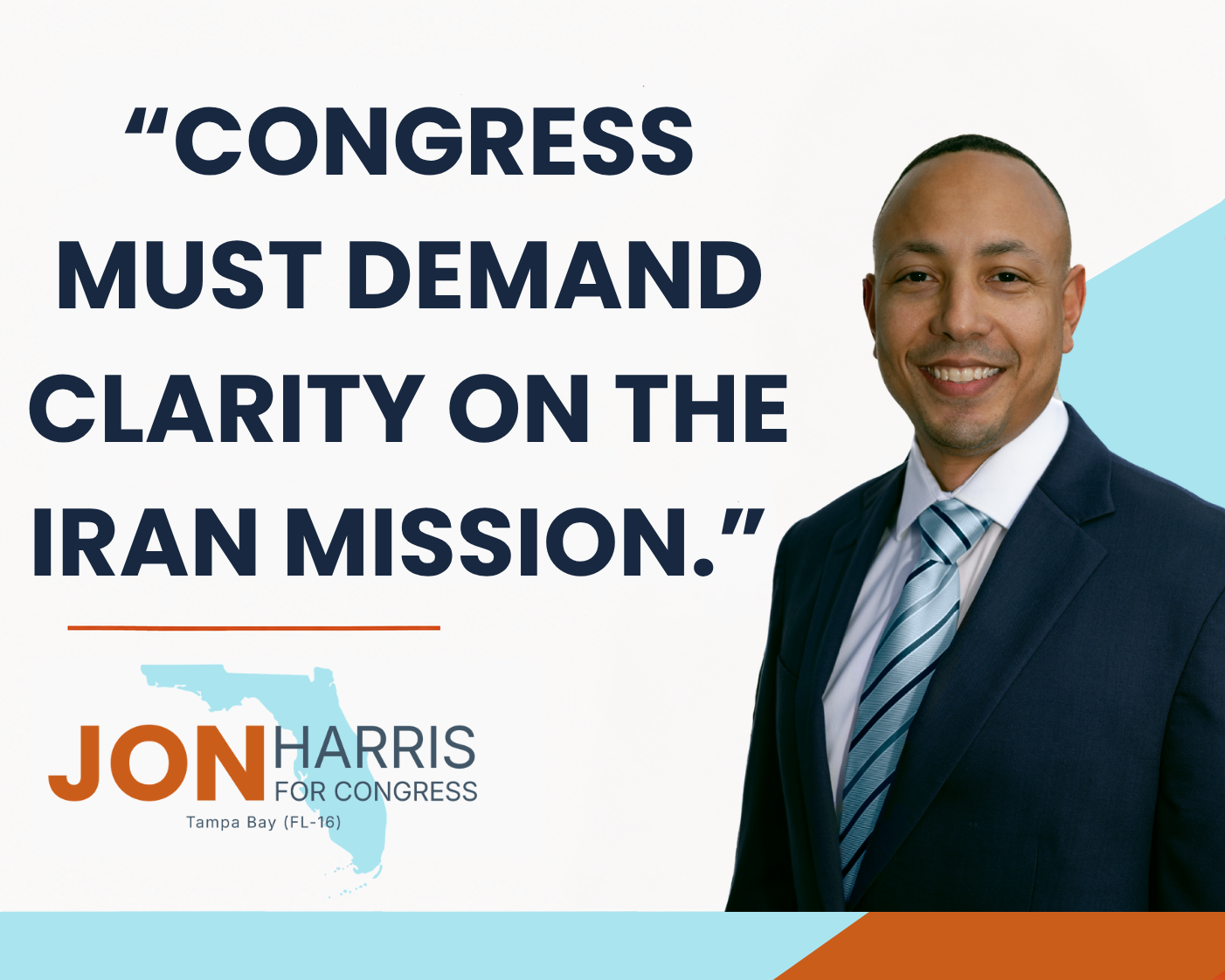
Congress must demand clear objectives, accountability, and an end strategy for the ongoing Iran conflict and U.S. military operations in the Strait of Hormuz
I have spent more than 20 years in military service, and one thing I have learned is that words matter when you are sending Americans into harm’s way.
The administration has repeatedly told the American people that Iran was defeated and that the Strait of Hormuz was open and under American control.
Now the Secretary of Defense says the United States can maintain a naval blockade of Iran “indefinitely.”
Those statements raise a basic question:
What is the mission now?
If Iran has been defeated, why are American sailors still being asked to sustain an open-ended military operation in the region?
If the Strait of Hormuz is open, why is commercial shipping still severely disrupted?
And if the mission can continue indefinitely, what exactly is the end state we are working toward?
These are the questions Congress should be asking whenever American service members are being placed in harm’s way.
A military operation needs a clearly defined objective. It needs the resources required to accomplish that objective. It needs an honest assessment of the risks. And it needs a realistic understanding of what success looks like and how the mission ends.
“Indefinitely” is not an end state.
Our sailors, soldiers, airmen, Marines, and their families deserve more than shifting explanations from Washington. They deserve to know that when this country asks them to accept risk, the people making those decisions have a clear strategy and understand the consequences.
We also have to consider what prolonged operations mean for readiness.
Aircraft carriers, destroyers, and their crews cannot remain deployed forever without cost. Ships require maintenance. Crews need rest and training. Families live with the strain of extended deployments. Every asset committed to one theater is an asset that cannot be somewhere else if another crisis develops.
That is why Congress has a constitutional responsibility to demand clarity.
What is the objective?
What would constitute success?
What resources will this require?
What are the risks of further escalation?
And what is the plan to bring the mission to an end?
Supporting our military does not mean avoiding those questions. It means asking them before open-ended commitments become the new normal.
Strength is not declaring victory before the work is finished.
Strength is being honest about where we are, having a strategy for where we are going, and knowing when the mission is complete.
That is the standard I believe Congress should demand. That is the standard I will be as representative of Florida’s 16th Congressional District.
