
Read Our Full Proposal on the Growth Economy
Why Jon Harris Is Running

Jon Harris is running for Congress because he believes working families across Florida’s 16th Congressional District are being squeezed by rising costs while Washington continues to favor powerful corporations and special interests.
A Combat Veteran, Army Reserve Officer, Cybersecurity Professional, Husband, and Father of two daughters, Harris says the Growth Economy comes from personal experience. Like many families, he and his wife have sat at the kitchen table trying to figure out how to afford childcare, housing, insurance, and healthcare while still getting ahead.
After nearly 20 years of military service and a career solving complex problems in cybersecurity, Harris says he wants to bring a service-first mindset to Congress and focus on one goal: making life more affordable for working families.
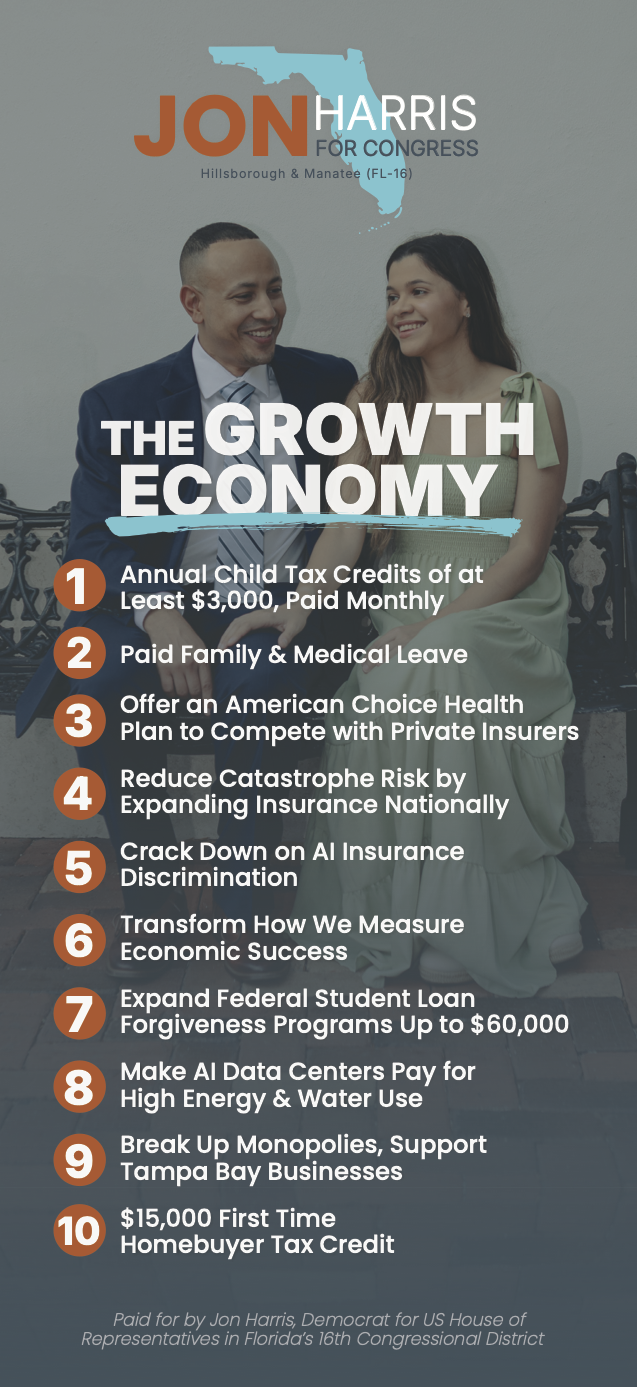
Families across Florida and the country are working harder than ever, yet too many still struggle with rising costs for housing, healthcare, insurance, groceries, and education. The Growth Economy is built around a simple principle: Economic growth should improve life for working people, not just large corporations and billionaires.
This plan focuses on lowering costs, expanding competition, strengthening families, and building an economy where success is measured by what households can actually afford.
Top Priorities
Lower Healthcare Costs Through Competition
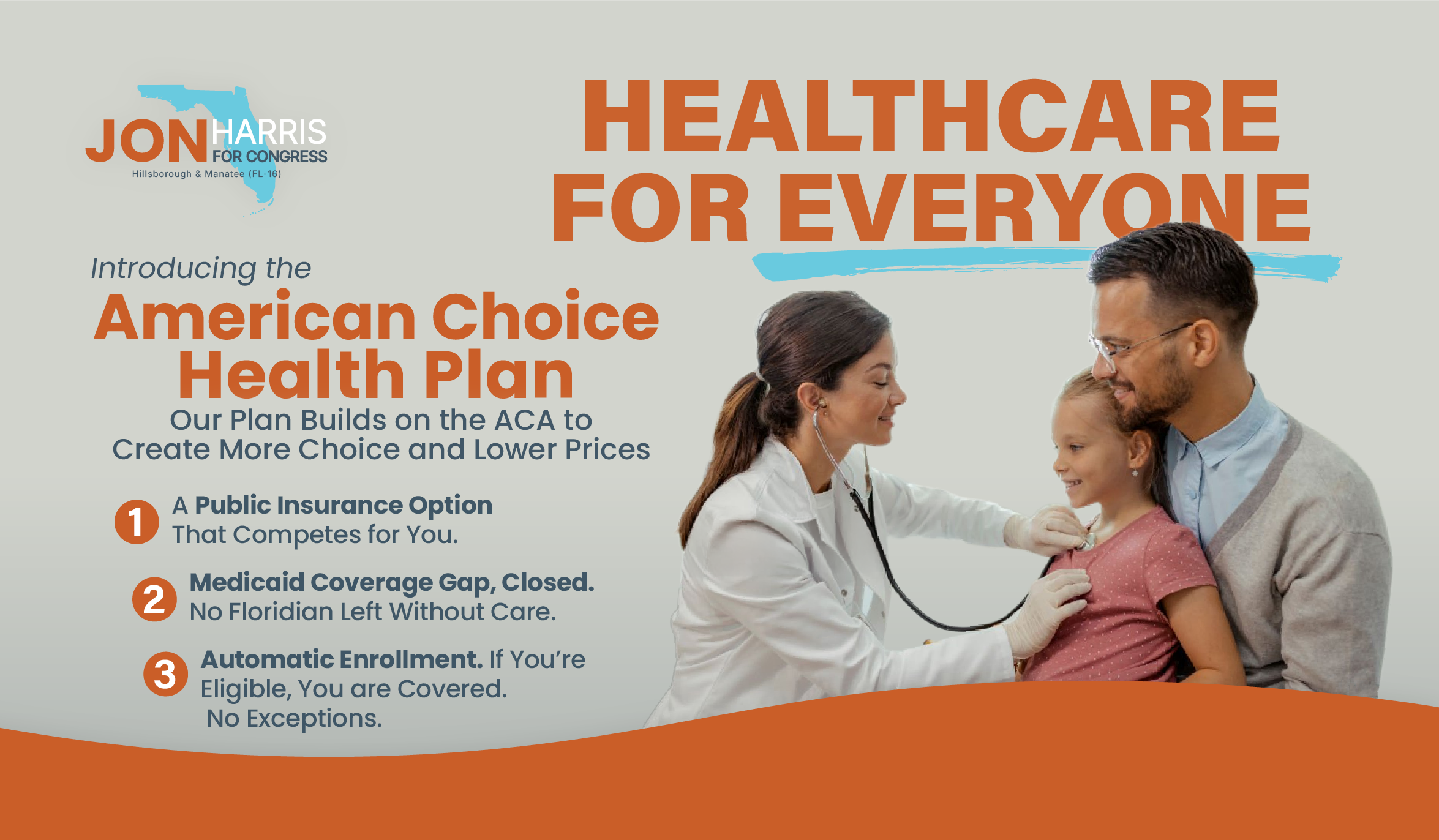
The plan establishes an American Choice Health Plan, a Medicare-style public option designed to compete with private insurers and drive down healthcare costs. By increasing competition, the proposal aims to lower premiums, reduce deductibles, and make prescription medications more affordable for working families.
The proposal also
Expands competition in insurance marketplaces,
Increases transparency for hospital and drug pricing,
Strengthens the government’s ability to negotiate prescription drug prices, and
Cracks down on algorithmic discrimination by insurance companies using AI systems.
Case Study: Medicare Advantage and Competitive Pressure in Healthcare
We can already see how competition can lower costs and expand choice in parts of the healthcare system, particularly through Medicare Advantage.
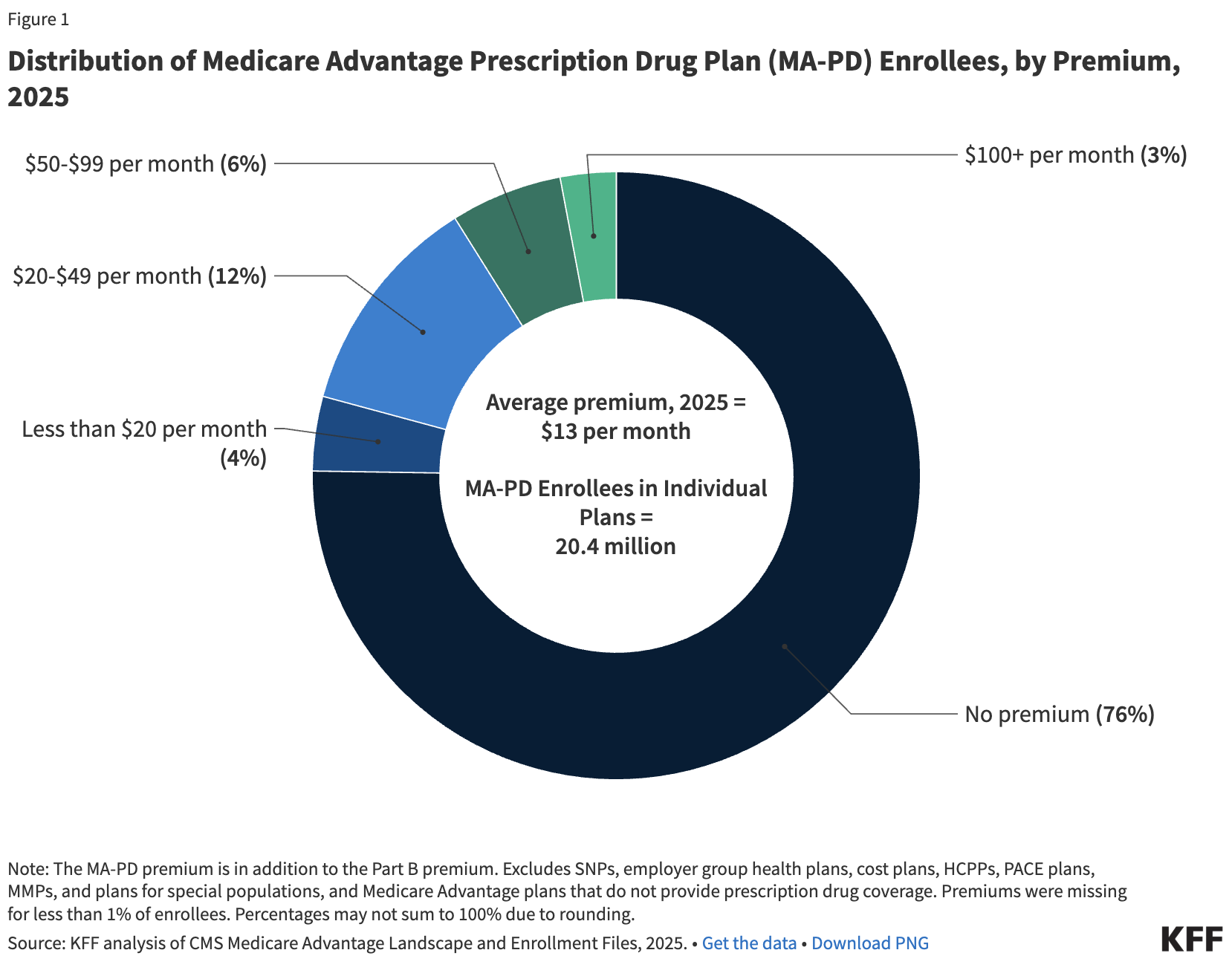
When private insurers were allowed to compete for Medicare beneficiaries, it introduced more plan options and in many cases additional benefits like lower premiums, capped out-of-pocket costs, and extra services such as dental or vision coverage. While the system is not perfect, it shows a core principle of our Growth Economy: When public benchmarks exist and competition is real, families tend to get more value and more choice.
This is the model we believe should be expanded through an American Choice Health Plan, a public option that competes directly with private insurers to drive down costs and improve coverage for working families.
Reduce the Insurance Crisis
Insurance costs are crushing families and homeowners, especially in Florida. This plan addresses the problem nationally by
Expanding catastrophe risk-sharing programs,
Stabilizing insurance markets,
Increasing transparency in rate-setting,
Preventing insurers from abandoning entire regions, and
Encouraging investments in risk reduction and storm mitigation.
Make Housing More Affordable
The plan seeks to increase housing supply and help first-time buyers enter the market through
A $15,000 First-Time Homebuyer Tax Credit,
Incentives for new housing construction,
Expanded financing for workforce and middle-income housing,
Reducing barriers that unnecessarily restrict supply, and
Limiting speculative practices that drive up prices.
Reward Work and Strengthen Families
The Growth Economy agenda includes policies designed to help working families keep up with rising costs:
Increase the Child Tax Credit to at least $3,000 per child,
Pay the credit monthly to help with ongoing expenses,
Expand the Earned Income Tax Credit,
Raise the federal minimum wage to at least $15/hour,
Establish paid family and medical leave,
Expand school meal programs, and
Support partnerships with local agriculture to reduce food costs.
Case Study: Expanding the Child Tax Credit
We believe one of the clearest examples of what works for working families is the federal expansion of the Child Tax Credit in 2021.
When families received monthly payments of up to $300 per child, millions of parents were able to better afford childcare, groceries, rent, and school expenses without falling behind. Research showed the policy significantly reduced child poverty and gave families more breathing room in their monthly budgets, while maintaining strong workforce participation.
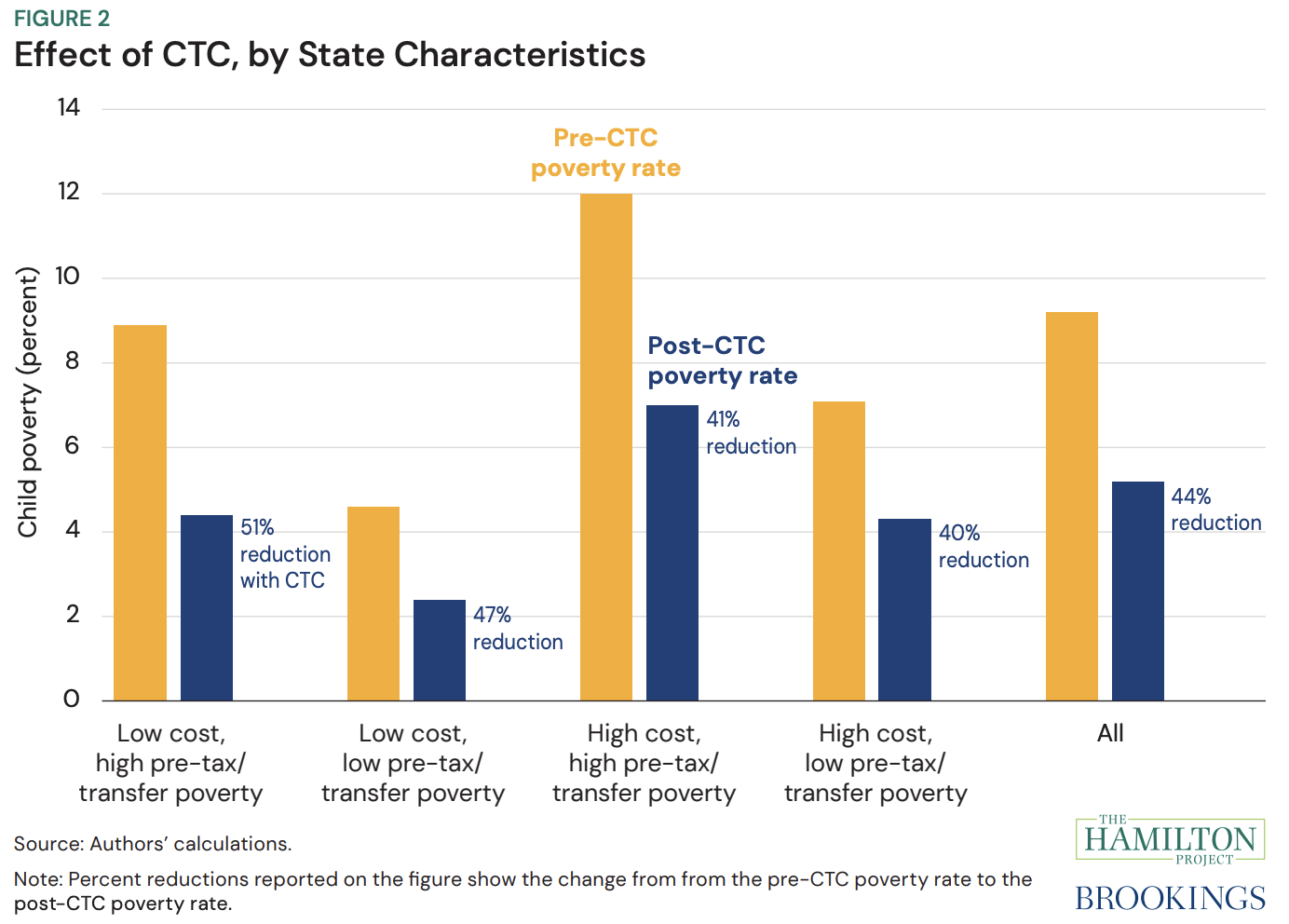
This experience reinforces what our Campaign is fighting for: When we put money directly into the hands of working families and reduce unnecessary financial strain, we see immediate improvements in stability, opportunity, and quality of life.
Expand Student Loan Forgiveness for High-Need Careers
The plan creates expanded federal student loan forgiveness opportunities for workers in critical industries, including:
Healthcare,
Teaching,
Engineering,
Construction,
Cybersecurity,
Artificial intelligence,
Data science, and
Software engineering.
Borrowers would qualify through long-term employment and repayment, similar to the Public Service Loan Forgiveness program, with forgiveness available up to approximately $60,000 over time.
Protect Consumers and Lower Hidden Costs
The plan strengthens consumer protections by
Limiting junk fees and mandatory add-on charges,
Improving price transparency,
Addressing excessive credit card penalties and interest rates,
Regulating algorithmic price discrimination, and
Strengthening federal consumer protection enforcement.
Support Small Businesses and Competition
Too much economic power is concentrated in a small number of corporations. To address this, the Growth Economy
Strengthens antitrust enforcement,
Increases oversight of mergers in essential industries,
Protects small and regional competitors, and
Expands federal grant access for women-owned and small businesses.
Special emphasis is placed on supporting entrepreneurship and small business growth in Florida’s 16th Congressional District and across the state.
Modernize How Economic Success Is Measured
Traditional economic statistics often fail to reflect what families experience in daily life. The Growth Economy proposes measuring economic success using
Cost-of-living trends,
Wage growth after essential expenses,
Household affordability, and
Family financial stability.
The goal is to focus policymaking on whether working families are actually getting ahead.
Investing in Future Industries
The Growth Economy supports growth in emerging industries, including:
Artificial intelligence,
Nuclear energy,
Electric vehicles,
Hydrogen power, and
Advanced manufacturing.
At the same time, the plan proposes requiring large AI data centers to pay higher rates for excessive energy and water usage to protect households from rising utility costs.
Paying for the Plan
The proposal would be funded through a combination of
Higher taxes on ultra-billionaires,
Closing loopholes on capital gains and carried interest,
Ending tax loopholes used by private foundation museums,
Reducing waste, fraud, and abuse in defense spending, and
Economic growth from expanding emerging industries.
The Bottom Line
The Growth Economy agenda is designed around one core question:
Is the economy making life more affordable and stable for working families?
Rather than focusing only on stock market growth or corporate profits, this plan prioritizes
Lower costs,
Fair competition,
Stronger wages,
Family stability, and
Expanded opportunity.
The goal is an economy where growth is broadly shared and working people benefit directly from the country’s prosperity.
